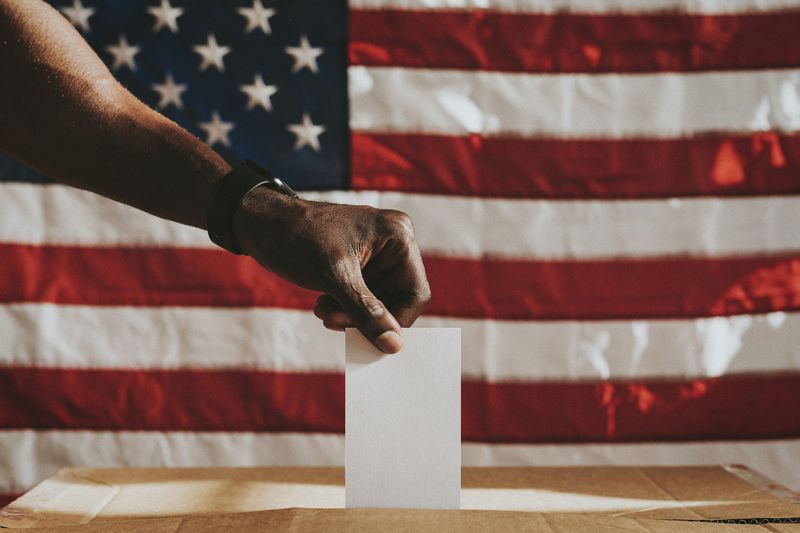
Are We Yet Free?: Independence and the Fight for Reparations
By Melisha Daniels - July 4, 2026Tweet
Today is July 4th. The 250th birthing date of the United States of America.
Today Americans will celebrate, by way of backyard barbecues and fireworks, the nation's semiquincentennial anniversary. Commemorating the day, 250 years ago, the 2nd Continental Congress of the United States, adopted the Declaration of Independence. The document declared the then 13 American colonies a free and independent nation. The country’s founders verbally and in writing proclaimed “all men are created equal”. And while the term Independence itself implies a condition of completed achievement, a final annexation from the political rule of Great Britain. For Black Americans freedom is a claim that remains under negotiation.
Like an unredressed wrong, the call for reparations sits inside America's unfinished story of Independence. Are we yet free?

The Meaning of Independence
The ideology of independence carries with it a force that gives that human desire that drove the colonists to the Americas a name - Freedom. Yet in America's Independence story, freedom walks parallel alongside a profound contradiction. Enslaved people produced wealth that others accumulated, inherited, and protected. The same democracy that declared 'Liberty and Justice for all’ was built within a world that denied that same liberty to the enslaved Africans who built the buildings and toiled the lands.
The fight for reparations has never been a strictly monetary endeavor. Reparations is instead a strive for equinormality. A hope for a time when with all things being equal, all things will be equal. It is a test of whether a nation can extend claims built into its very foundation, beyond the comfort of its unequal beneficiaries.
This test remains undecided.
For some, July 4th is a celebration of civility. An inheritance of independence and freedom afforded to United States citizens. For African Americans, this inherited freedom oft times appear in the guise of uneven distribution of resources, legal disparities and systemic racism.
For many of us Independence is a constant exercise of free, but not yet free practicality.
Slavery and Reparations
Ironically, the case for reparations begins with the colonists' desire for independence. Chattel slavery was not a mere after thought of the New World, but a systemically brutal institution that robbed enslaved Africans and their descendants of labor, life and wealth. It's aftereffects continue to reek havoc on the Black family some 250 years later in the form of Black Codes, segregation, housing discrimination, unequal pay and disparate employment practices. With public policies that helped build prosperity for some, while resigning others to a cycle of poverty and incarceration.
It is time for the country to make recompense.
Wealth denied in one generation becomes opportunity denied in the next. And communities stripped of assets, legal protections, and civic standing do not simply recover when the law changes. The afterlife of slavery is visible in racial disparities in health, income, land ownership, incarceration, and political power that Black Americans endure to this day.
The past is not the past when it is the present consequence of daily life.
Why Reparations Matter
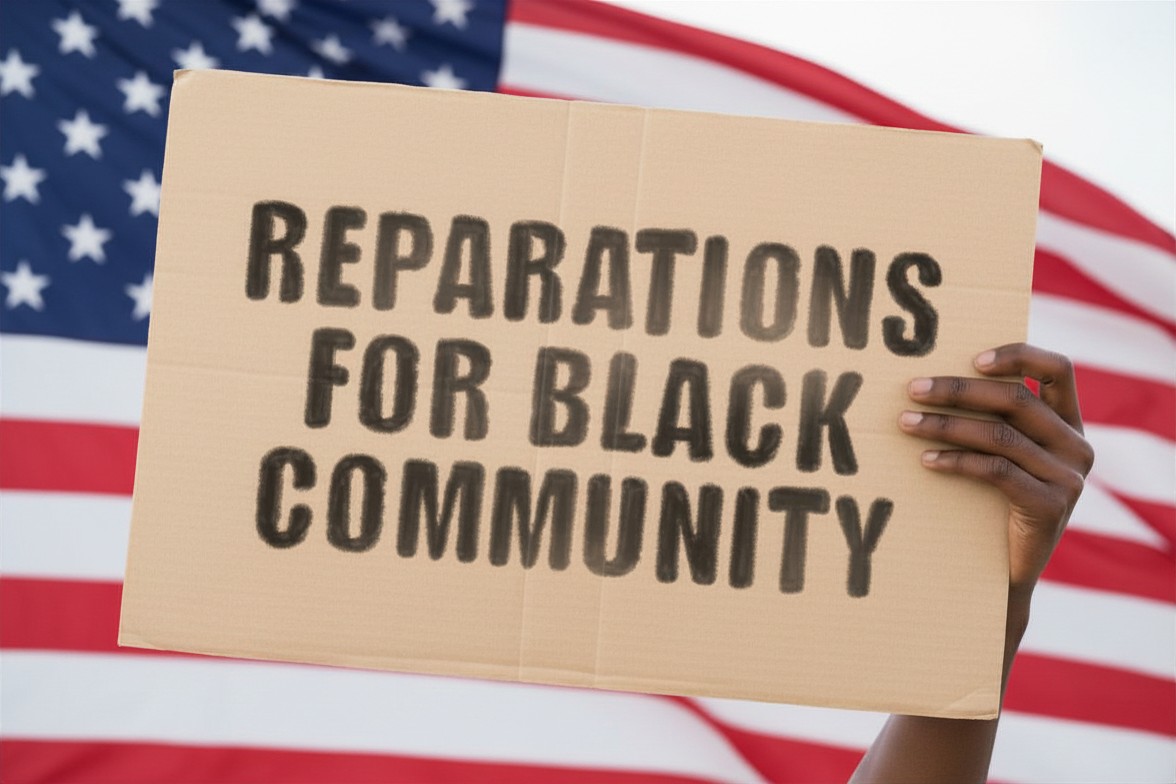
Talk of reparations is always reduced to a monetary debate. Who is going to pay, with what and to who?
For America, the matter of reparations is deeper than that. It is a social responsibility. Reparations ask whether a democracy has the courage to repair what it helped break. It’s not about assigning guilt to individuals for events they did not personally cause. It's about recognizing a moral obligation. Reparations is about equaling economic and social inequality.
Reparations invite the nation to tell the truth about how wealth and citizenship were distributed, and to consider what repair might look like in material as well as symbolic terms. If independence is to mean more than ceremonial pride, it must include the willingness to confront the structures that made freedom unequal. Repair is not an act of weakness. It is evidence the nation takes its own ideals seriously.
Reparation Initiatives
As of the 250th birth date of our beloved country, the United States of America, initiatives to discuss compensating the descendants of the victims of the most vicious institution of chattel slavery are under way. House Rule 40 of the 119th Congress, Commission to Study and Develop Reparation Proposals for African Americans Act, originally introduced by U.S. Representative John Conyers in 1989, was established to study and develop reparation proposals for African Americans.
The 1st U.S. city to implement a reparations program, Evanston, IL implemented a municipal reparations program that provided Black residents with $25,000 for housing assistance in 2021. In 2024, a group of non-Black plaintiffs filed suit, Flinn v. City of Evanston, arguing the race-based distribution of funds violates the Equal Protection clause. In 2026, the Department of Justice ruled the reparations program unconstitutional racial discrimination. Despite the most recent ruling, the city has already distributed millions of dollars in Independence, I mean reparations to eligible residents.
Freedom is not just backyard barbecues and fireworks.
Reparations is more than monetary. It is a measurement of bravery of the nation to face its wrongs and strength to make amends. If July 4th is more than mere symbolism, it is also a responsibility to stand by the words proclaimed at it’s birth, 250 years ago – All men are created equal. The unfinished fight for reparations demands compensation for the labor of the enslaved - physical, emotional and societal.
Until freedom is shared among all American citizens, we are not yet free.